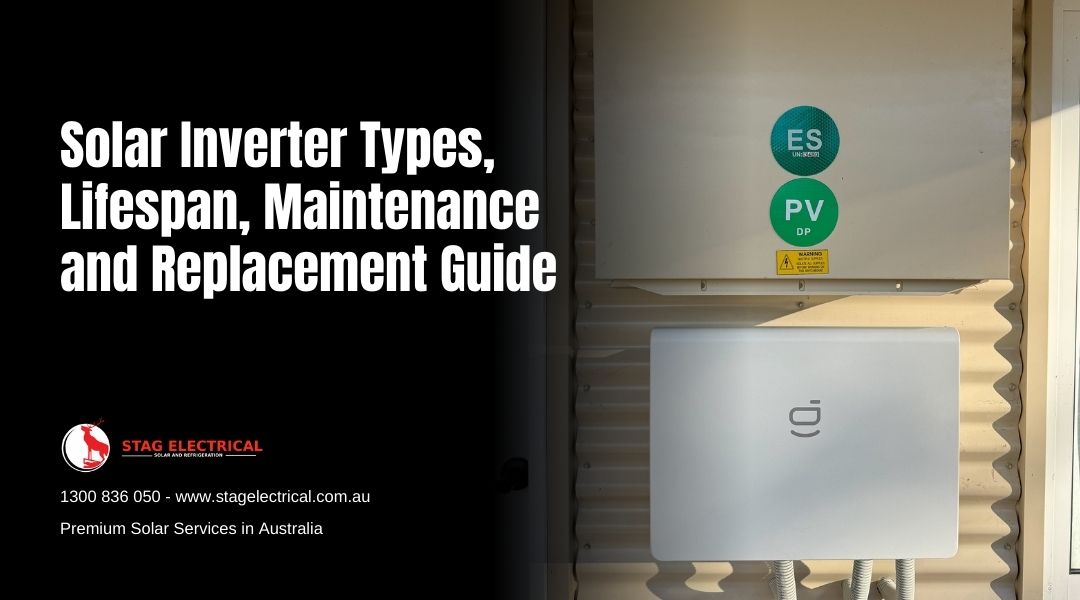
Quick Summary
Your solar inverter is the most active component in your solar power system. It operates every day converting energy, managing grid interaction, controlling battery storage, and protecting electrical safety.
Unlike solar panels, which are largely passive devices, inverters contain power electronics, cooling systems, and control circuits that operate continuously under thermal and electrical stress.
Over the lifetime of your solar system, your inverter will likely be repaired, serviced, and eventually replaced. Understanding inverter types, expected lifespan, maintenance requirements, and replacement options is essential for protecting your long term return on investment.
This guide explains how different inverter architectures perform, how long they typically last, how to identify early fault signs, and how to plan for replacement or upgrade.
Solar Inverter Types Used in Australian Homes
Australian homes use three primary inverter architectures.
String Inverters
String inverters connect multiple solar panels into one or more DC strings that feed into a central inverter.
This remains the most common inverter architecture in Australia.
Advantages:
- Simple system design
- Lower upfront cost
- Easy servicing
- Proven long term reliability
Limitations:
- Performance of one panel can affect the string
- Limited panel level visibility
String inverters are well suited to homes with uniform roof orientation and minimal shading.
Hybrid Inverters
Hybrid inverters combine solar generation and battery management into a single unit.
They support:
- Battery charging and discharging
- Backup power configurations
- Smart load management
- Energy flow optimisation
Advantages:
- Battery ready design
- Simplified upgrade pathway
- Integrated monitoring
- Future proof system architecture
Limitations:
- Higher upfront cost
- Battery compatibility requirements
Hybrid inverters are ideal for homes planning battery storage now or in the future.
Microinverters
Microinverters operate at the individual panel level.
Advantages:
- Panel level optimisation
- Shading mitigation
- Redundancy protection
- Detailed performance visibility
Limitations:
- Higher upfront cost
- More electronics on the roof
Microinverters are best suited to complex roof layouts with multiple orientations or shading constraints.
Inverter Brands We Install and Support
Inverter quality is just as important as inverter architecture.
At Stag Electrical, our inverter selection is based on:
- Engineering reliability
- Australian grid compliance
- Battery integration capability
- Monitoring platform quality
- Local service support
- Long term manufacturer stability
We primarily install and support the following inverter brands.
GoodWe
GoodWe offers one of the most comprehensive hybrid inverter portfolios in the Australian residential market.
GoodWe systems are widely used for battery ready and storage focused homes.
Best suited for:
- Battery ready installations
- Storage upgrades
- Smart energy systems
- Energy management platforms
Sungrow
Sungrow is one of the largest inverter manufacturers globally and a major supplier to the Australian solar market.
Sungrow systems are widely deployed across residential and commercial applications.
Best suited for:
- Residential solar systems
- Hybrid installations
- High capacity homes
- Cost efficient system builds
Sigenergy
Sigenergy provides fully integrated inverter and battery platforms for advanced home energy systems.
Sigenergy systems combine solar, storage, and energy management into a unified platform.
Best suited for:
- Full home electrification
- Smart home energy systems
- Advanced battery storage
- Energy independence solutions
Honorable Mention Inverter Brands
Other reputable inverter brands include:
- Fronius
- SolarEdge
- Enphase
These manufacturers offer proven products but are not part of our primary supported platforms.
Typical Solar Inverter Lifespan
Inverter lifespan depends on build quality, operating temperature, and duty cycle.
Typical expectations:
- String inverters: 10 to 15 years
- Hybrid inverters: 10 to 15 years
- Microinverters: 20 to 25 years
Inverter warranties reflect these expectations.
Factors That Affect Inverter Lifespan
Temperature Exposure
Heat is the primary stress factor for power electronics. Poor ventilation and direct sun exposure reduce lifespan.
Operating Load
Inverters operating near maximum capacity experience higher thermal stress.
Grid Conditions
Voltage fluctuations increase electrical stress on inverter components.
Installation Quality
Poor cable terminations and airflow restrictions increase operating temperature.
Maintenance Requirements
Solar inverters require minimal routine maintenance but benefit from periodic inspection and monitoring.
Homeowner Monitoring
Homeowners should:
- Monitor system production through the monitoring platform
- Check inverter display and status lights only
- Review system alerts
Professional Servicing
Licensed and accredited solar technicians perform:
- Electrical testing
- Firmware updates
- Cooling system inspection
- Isolator inspections
- Thermal imaging diagnostics
Common Signs of Inverter Failure
- Error messages on the inverter display
- Flashing warning lights
- Zero production on sunny days
- Repeated shutdowns
- Monitoring communication loss
Any inverter fault should be assessed by a licensed electrician or accredited solar technician.
When to Replace a Solar Inverter
Inverter replacement becomes necessary when:
- The inverter has failed outside warranty
- Repair costs exceed replacement cost
- The inverter is incompatible with battery upgrades
- Grid compliance rules change
- Performance degrades significantly
Inverter Replacement vs System Upgrade
Replacement options include:
- Like for like inverter replacement
- Upgrade to hybrid inverter
- Battery integration upgrade
- System capacity expansion
Many homeowners choose to upgrade their inverter when replacing.
The Cost of Inverter Replacement
Replacement costs depend on:
- Inverter size
- Brand
- Installation complexity
- Battery readiness
Inverter replacement is far more cost effective than replacing an entire solar system.
Planning for Long Term Ownership
Your inverter will likely be replaced at least once during the life of your solar panels.
Long term planning includes:
- Choosing brands with long product support lifecycles
- Registering warranties
- Monitoring system performance
- Scheduling periodic inspections
Final Thoughts
Your inverter is the operational heart of your solar system.
Choosing the right architecture, selecting a trusted brand, maintaining it correctly, and planning for replacement protects your investment and ensures long term system performance.
Protect Your Solar Investment Today
Ensure your solar system performs reliably for decades with the right inverter and maintenance plan. Contact Stag Electrical for expert advice, trusted inverter brands, and professional installation or replacement services tailored to your home.