Quick Summary
Many Australian homeowners understand the basics of solar energy. Solar panels generate electricity from sunlight, and solar batteries store excess energy for later use. Understanding how these two technologies work together can help you get the most value from your energy system.
Whether you're considering installing solar for the first time, adding battery storage to an existing system, or trying to understand where your electricity comes from during the day, knowing how solar and batteries interact is essential.
Solar panels and batteries work as a team. Solar generates energy, while the battery stores what you don't use immediately. Together, they can significantly reduce electricity bills, increase energy independence, and help households make better use of the energy they generate.
In this guide, we'll explain exactly how solar panels and batteries work together, what happens to your energy throughout the day, and whether battery storage could help you maximise your solar investment.
What Does A Solar Panel System Do?
Solar panels generate electricity by converting sunlight into usable energy. When sunlight hits the solar cells on your roof, the panels produce direct current (DC) electricity. Your inverter converts this into alternating current (AC) electricity to power your household appliances.
The amount of electricity your system produces varies throughout the day. Production increases in the morning, peaks around midday, and gradually declines in the afternoon before stopping after sunset. Several factors influence how much electricity your solar system generates, including:
- System size
- Roof orientation
- Shading
- Weather conditions
- Seasonal changes
- Geographic location
A well-designed solar system can generate substantial electricity during daylight hours, often producing more energy than the home uses at certain times.
🔅 Early Morning — Low solar production
☀️ Mid-Morning — Production steadily increases
🌞 Midday — Peak solar generation
🌤️ Afternoon — Moderate production as sunlight decreases
🌙 Evening — No solar production
🌑 Overnight — No solar production
This production pattern is a main reason battery storage has become popular.
Why Solar Alone Doesn't Always Maximise Savings
One of the biggest misconceptions about solar is that generating electricity automatically means you're using all of it. In reality, many households are empty during the day when solar production is at its highest.
A common scenario looks something like this:
- Solar panels generate large amounts of electricity between 10 am and 3pm.
- Family members are at work or school.
- Household electricity usage is relatively low.
- Excess solar energy is exported to the grid.
- The household receives a feed-in tariff for exported electricity.
- The family returns home in the evening.
- Electricity demand increases significantly.
- Solar production has stopped.
- Electricity is purchased back from the grid at a much higher rate.
This is where many homeowners discover the gap between generating solar energy and actually using it. While feed-in tariffs can provide some value, they are often significantly lower than the price households pay for grid electricity. As electricity prices continue to rise, more homeowners are looking for ways to store their excess solar energy rather than exporting it.
What Does A Solar Battery Do?
A solar battery stores excess electricity generated by your solar panels during the day.
Instead of sending unused energy back to the grid immediately, the battery captures and stores it for later use.
Think of your battery as a giant rechargeable power bank for your home.
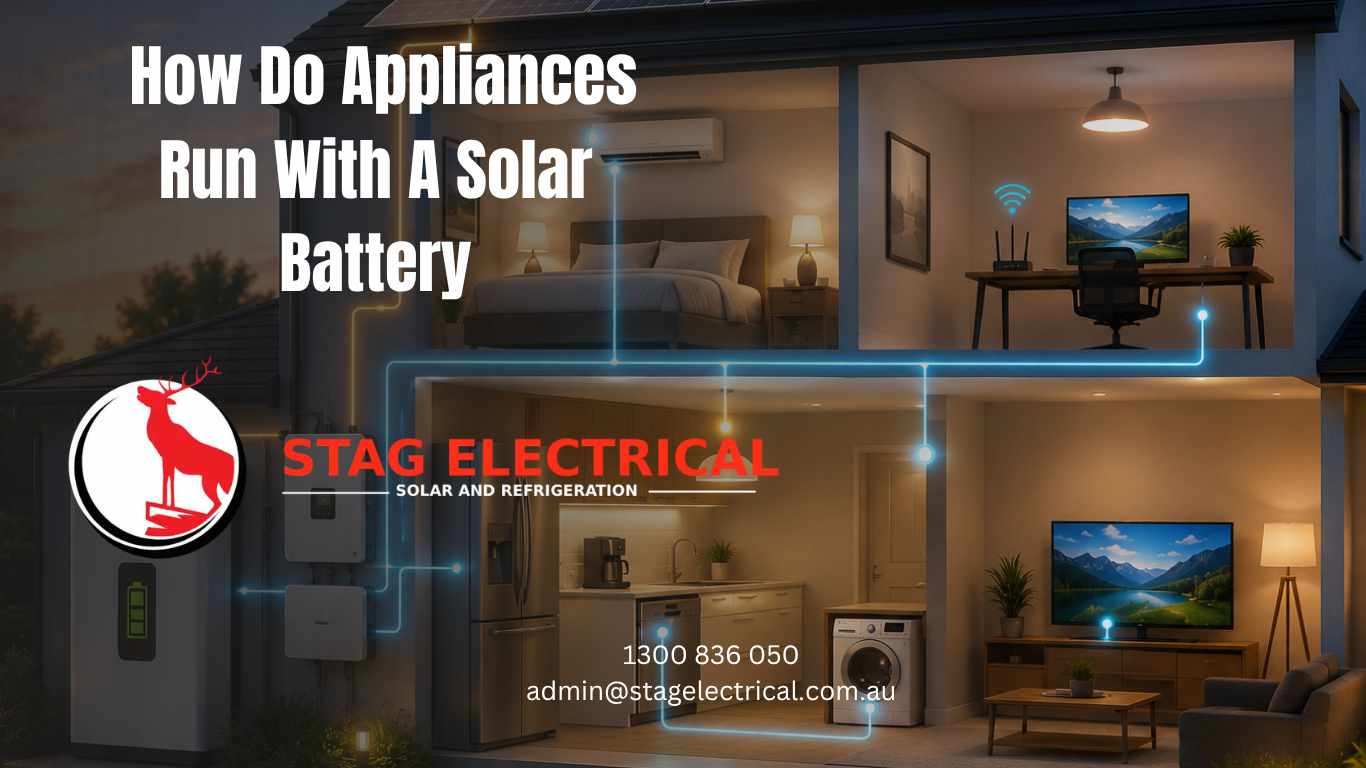
When your solar panels produce more electricity than your household needs, the excess energy goes into the battery. Later, when solar production stops or demand increases, the battery releases that stored energy back into the home.
The process generally works like this:
- Solar panels generate electricity.
- Household appliances use the electricity they need.
- Excess electricity charges the battery.
- The battery stores unused energy.
- Stored energy powers the home later in the day.
Instead of relying on expensive grid electricity after sunset, homeowners can use the solar energy they generated earlier.
How Solar And Batteries Work Together
The real benefit happens when solar panels and batteries operate together as a complete energy system. Modern solar battery systems automatically manage energy flow throughout the day without any input from the homeowner. Let's look at what typically happens.
Morning
As the sun rises, your solar panels begin generating electricity.
Production starts low but gradually increases throughout the morning.
The energy generated is usually prioritised in this order:
- Household electricity usage
- Battery charging
- Grid export
If your household is using electricity, solar energy powers those appliances first.
Midday
Around midday, solar production is often at its highest. At this point, many households produce significantly more electricity than they consume. The excess energy is directed into the battery, charging it for later use. Once the battery is full, any extra surplus energy can be exported to the grid. For many households, this is the period when most battery charging occurs.
Afternoon
Solar production starts to taper off but may still exceed household demand. The battery continues charging if capacity remains available. Any remaining excess electricity is exported to the grid.
Evening
This is where battery storage delivers its biggest benefit. As the sun sets, solar production drops to zero. Rather than purchasing electricity from the grid immediately, the home begins drawing power from the battery.
The battery can power:
- Lighting
- Televisions
- Refrigerators
- Air conditioning
- Kitchen appliances
- Computers
- Home office equipment
- Internet systems
Instead of paying peak electricity prices, homeowners are using energy they generated earlier in the day.
Overnight
Depending on the battery size and household usage, stored energy may continue to power the home throughout the night. Once the battery reaches its minimum reserve level, the home automatically draws electricity from the grid. The next morning, the cycle begins again.
A Typical Day With Solar And Battery Storage
While every household is different, this simplified example illustrates how energy might flow through a typical solar-and-battery system. The goal is simple: maximise the amount of self-generated solar energy used within the home.
A Typical Day With Solar And Battery Storage
- 7am – Your home is powered by a combination of solar energy and grid electricity as solar production ramps up.
- 10am – Solar panels are generating enough electricity to power most household appliances directly from the sun.
- 12pm – Solar production is near its peak, allowing your home to run on solar while charging the battery with excess energy.
- 2pm – Solar generation remains strong, with any surplus energy continuing to charge the battery for later use.
- 6pm – As the sun sets and solar production drops, the home begins drawing power from the battery instead of the grid.
- 9pm – Stored battery energy continues powering household appliances throughout the evening.
- Midnight – The battery powers essential appliances overnight, such as refrigeration, internet equipment, and standby devices.
- 3am – If the battery has been depleted, the home typically switches back to grid electricity until solar production resumes the following morning.
Keep in mind: Every household is different. The exact times your home switches between solar, battery, and grid power depend on your energy usage, battery size, weather, and the amount of solar your system generates each day.
What Appliances Can Solar And Batteries Run?
The appliances your system can power depend on several factors, including:
- Solar system size
- Battery capacity
- Inverter specifications
- Household electricity demand
During The Day
Solar panels may power:
- Air conditioners
- Refrigerators
- Pool pumps
- Washing machines
- Dishwashers
- Electric hot water systems
- Home offices
- EV chargers
If solar production exceeds demand, excess energy charges the battery.
During The Evening
The battery may then power:
- Lights
- Televisions
- Refrigerators
- Internet and Wi-Fi equipment
- Fans
- Security systems
- Small kitchen appliances
- Laptops and computers
Larger appliances like ducted air conditioning, ovens, and EV chargers can be powered depending on battery size and inverter capacity. The larger the battery, the more energy it can store and supply when required.
How Much Solar Energy Can A Battery Store?
Battery capacity is measured in kilowatt-hours (kWh). The larger the battery capacity, the more solar energy it can store. However, bigger isn't always better. The ideal battery size usually matches your evening and overnight electricity usage rather than buying the largest system available.
5kWh: Great for smaller households.
10kWh: The sweet spot for many Australian homes.
13.5 kWh: Ideal for larger families and higher energy use.
20 kWh+: Best for homes with air conditioning, pools, EV charging, or significant overnight consumption.
The right battery size depends on how much electricity you use after the sun goes down, not just how much power your solar system generates during the day.
Choosing the right battery size depends on:
- Household electricity usage
- Solar system size
- Family size
- Appliance usage patterns
- Electric vehicle ownership
- Backup power requirements
A professional assessment can help determine the best battery capacity for your needs.
Do You Need A Battery If You Already Have Solar?
Many homeowners with solar panels wonder if adding a battery is worthwhile. For some households, a battery can dramatically improve solar utilisation. A battery may be worth considering if:
- Your feed-in tariff is relatively low
- You use most of your electricity in the evening
- Your electricity bills remain high despite having solar
- You want greater energy independence
- You own or plan to purchase an EV
- You intend to stay in the property long term
Homes empty during the day often see the greatest benefits from battery storage because much of their solar generation would otherwise be exported. By storing that excess energy, households can use it later when electricity prices are typically highest.
Can Solar And Batteries Provide Backup Power During Blackouts?
Many people assume all solar battery systems automatically provide backup power. This isn't always the case. Some solar systems shut down during grid outages for safety reasons, even if the panels still generate electricity.
To provide backup power, the system requires:
- A compatible battery
- A compatible inverter
- Backup power configuration
- Dedicated backup circuits
Many modern battery systems offer blackout protection if properly configured.
Popular options include systems such as:
- Tesla Powerwall 3
- Sigenergy SigenStor
- Sungrow battery systems
- GoodWe battery solutions
Backup functionality varies significantly between systems, making professional design important.
How Much Can Solar And Battery Storage Reduce Electricity Bills?
Savings vary between households, but combining solar panels with battery storage reduces reliance on grid electricity. Factors affecting savings include:
- Household energy usage
- Battery size
- Solar system size
- Electricity rates
- Feed-in tariffs
- Location
- Weather patterns
As a guide:
Solar Only
Many Australian households save approximately:
$1,200–$2,500+ per year
Solar And Battery Storage
Many households save approximately:
$1,800–$3,500+ per year
Every household is different, so tailored system design is important when calculating potential returns.
Is Combining Solar And Battery Storage Worth It?
For many Australian households, the answer is yes more often. Solar panels and battery storage complement each other. Solar generates electricity during the day, while batteries store energy for when households need it most. They can help:
- Reduce electricity bills
- Increase self-consumption of solar energy
- Improve energy independence
- Reduce reliance on the grid
- Provide backup power capabilities
- Protect against rising electricity prices
- Maximise the value of your solar investment
As battery technology improves and government incentives reduce installation costs, more homeowners find solar and battery storage a powerful combination. If you're considering installing a battery or upgrading your existing solar system, Stag Electrical can assess your energy usage, explain your options, and recommend a battery solution designed to maximise long-term savings and performance.