Quick Summary
Most people understand the basics of solar panels, but fewer know what happens behind the scenes to power a home with solar energy. A modern solar system is more than placing panels on a roof. Multiple components work together to generate electricity, convert it into usable power, store excess energy, and manage power flow throughout your home.
Whether you're considering solar for the first time or exploring battery storage, understanding each component's role helps you make informed decisions and maximise the value of your investment. This guide explains every major component of a modern solar and battery system, how they work together, and why each plays an important role in performance.
The Main Components Of A Solar System
A complete solar power system may include:
- Solar panels
- Solar inverter
- Solar battery
- Battery inverter or hybrid inverter
- Mounting system
- Monitoring system
- Smart energy management software
- Backup power equipment
- Switchboard upgrades
- Smart meter and grid connection
The exact configuration varies by system size, battery storage, and the homeowner's energy goals. For example, a homeowner aiming to reduce daytime electricity costs may only need solar panels and an inverter. Someone seeking greater energy independence or backup power during blackouts may add batteries, backup circuits, and advanced energy management systems.
Each component performs a specific function. Together, they create an integrated energy system designed to maximise solar generation and minimise reliance on grid electricity.
Solar Panels: Where Energy Generation Starts
Solar panels are the starting point of every solar energy system. Their job is to capture sunlight and convert it into electricity through photovoltaic (PV) cells. When sunlight hits these cells, an electrical reaction generates direct current (DC) electricity.
The amount of energy produced depends on several factors, including:
- Panel efficiency
- System size
- Roof orientation
- Roof pitch
- Shading
- Weather conditions
- Geographic location
Modern solar panels are more efficient than earlier generations, allowing homeowners to generate more electricity from less roof space. Most residential systems today range from 6.6kW to 13.2kW, though larger systems are becoming more common as households add batteries, electric vehicles, and all-electric appliances.
Solar panels get most attention as the system's most visible part, but they only generate electricity. Without supporting equipment, that electricity cannot be used effectively in the home.
The Solar Inverter: The Brain Of The System
If solar panels are the engine of the system, the inverter is the brain. Solar panels generate direct current (DC) electricity, but Australian homes use alternating current (AC). The inverter converts the electricity from your panels into a form your appliances can use.
However, modern inverters do much more than convert electricity. Today's inverters constantly monitor energy production and system performance and manage communication between solar panels, batteries, household loads, and the electricity grid.
Modern inverter functions may include:
- DC to AC conversion
- Performance monitoring
- Fault detection
- Grid export management
- Battery integration
- Backup power coordination
- Voltage regulation
- Remote diagnostics
A high-quality inverter can significantly influence overall system efficiency and reliability.
Since every unit of solar energy passes through the inverter, small efficiency improvements can lead to greater long-term energy production and savings. Without an inverter, your solar panels cannot power your home.
Solar Batteries: Storing Energy For Later
Solar panels generate the most electricity during daylight. Many households use the most electricity in the morning and evening when solar production is lower. This is where battery storage becomes valuable.
A solar battery stores excess electricity generated during the day so it can be used later when solar production decreases or stops altogether. Instead of exporting all surplus electricity to the grid, homeowners can store energy for later use. This commonly allows households to power:
- Lighting
- Refrigerators
- Internet and communications equipment
- Entertainment systems
- Pool pumps
- Household appliances
- Air conditioning systems
By increasing self-consumption of solar energy, batteries help reduce electricity purchases from retailers and improve energy independence. Battery systems are becoming more popular as electricity prices rise and feed-in tariffs decline across many parts of Australia.
For many homeowners, batteries provide greater control over energy use and allow them to make better use of the solar energy they generate.
Battery Inverters And Hybrid Inverters
When batteries are added to a solar system, equipment is required to manage charging and discharging cycles. Depending on the system design, this role is performed by either a battery inverter or a hybrid inverter.
A hybrid inverter combines solar and battery management in a single device. It controls electricity generated by the panels and manages battery charging, battery discharge, and household energy consumption.
Benefits of hybrid systems often include:
- Simpler installation
- Reduced equipment requirements
- Centralised monitoring
- Higher efficiency
- Easier future upgrades
Some battery systems use a dedicated battery inverter. This is common when batteries are added to an existing solar system rather than being installed simultaneously.
The choice between a hybrid inverter and a separate battery inverter depends on factors such as existing equipment, future expansion plans, and overall system design. adoption increases, hybrid inverter technology is rapidly becoming one of the most popular options for new solar installations.
Mounting Systems: The Foundation Of Your Solar System
Although rarely discussed, the mounting system is a crucial part of any solar installation.
Mounting hardware secures solar panels to the roof and keeps them safely positioned for decades despite Australia's harsh environmental conditions.The mounting system must withstand:
- Strong winds
- Heavy rainfall
- Extreme temperatures
- Corrosion
- Thermal expansion and contraction
Proper mounting design helps optimise panel positioning to maximise solar production year-round. Poor-quality mounting hardware can increase maintenance and shorten system lifespan.
Reputable installers use engineered mounting systems designed to suit local weather and roof structures. Although homeowners rarely see these components after installation, they play a crucial role in long-term system reliability.
Monitoring Systems And Smart Apps
Modern solar systems are no longer "set and forget" technology. Most installations now include monitoring platforms that let homeowners track performance in real time using a smartphone, tablet, or computer.
Monitoring software provides valuable insights into how the system is operating, including:
- Solar generation
- Battery charge levels
- Household energy usage
- Grid imports
- Grid exports
- Historical trends
- System alerts
This information helps homeowners understand their energy consumption patterns and find opportunities to increase solar self-consumption. It can also help detect issues before they become major problems. Sudden drops in solar production may indicate shading issues, equipment faults, or maintenance needs.
Many installers and manufacturers access monitoring data remotely, enabling faster troubleshooting and support.
Smart Energy Management Systems
Energy management technology is quickly becoming one of the most exciting developments in residential solar. Instead of just generating electricity, modern systems intelligently decide where energy should go during the day.
Advanced energy management systems can automatically determine whether electricity should be:
- Used immediately
- Stored in a battery
- Exported to the grid
- Used to charge an EV
- Purchased from the grid during cheaper periods
These systems respond to changing electricity prices, weather forecasts, and household consumption patterns. Some premium solutions now incorporate artificial intelligence to continuously optimise energy flows and maximise savings.
Features commonly found in advanced energy management platforms include:
- Time-of-use optimisation
- Dynamic battery charging
- EV charging integration
- Virtual Power Plant participation
- Load prioritisation
- Smart appliance control
As electricity pricing structures grow more complex, energy management software is expected to play a larger role in household energy systems.
Backup Power Equipment
A common misconception about solar batteries is that they automatically provide power during a blackout.In reality, blackout protection often requires additional equipment beyond the battery itself.
For safety, solar systems must disconnect from the grid during an outage. This prevents electricity from flowing back into damaged power lines while utility crews work.
To provide backup power safely, many systems require specialised equipment such as:
- Backup gateways
- Transfer switches
- Backup circuits
- Energy management controllers
These components allow the home to safely separate from the grid and continue operating using stored battery power. Backup power availability depends on battery size, inverter capabilities, and backup circuit configuration. Some homeowners back up only essential appliances, while others design systems to support larger parts of the home during outages.
Smart Meters And Grid Connections
Every grid-connected solar system requires a smart meter. A smart meter records electricity flow between the home and the network, measuring both imported and exported energy.
This information allows electricity retailers to calculate:
- Energy usage
- Feed-in credits
- Time-of-use charges
- Demand charges where applicable
Smart meters also enable homeowners to access more detailed information about energy consumption patterns.
As Australia's electricity network modernises, smart meters become increasingly important in supporting distributed energy resources such as solar panels, batteries, and electric vehicles.
Without a smart meter, accurately tracking solar exports or calculating financial benefits from a solar system is difficult.
How Everything Works Together
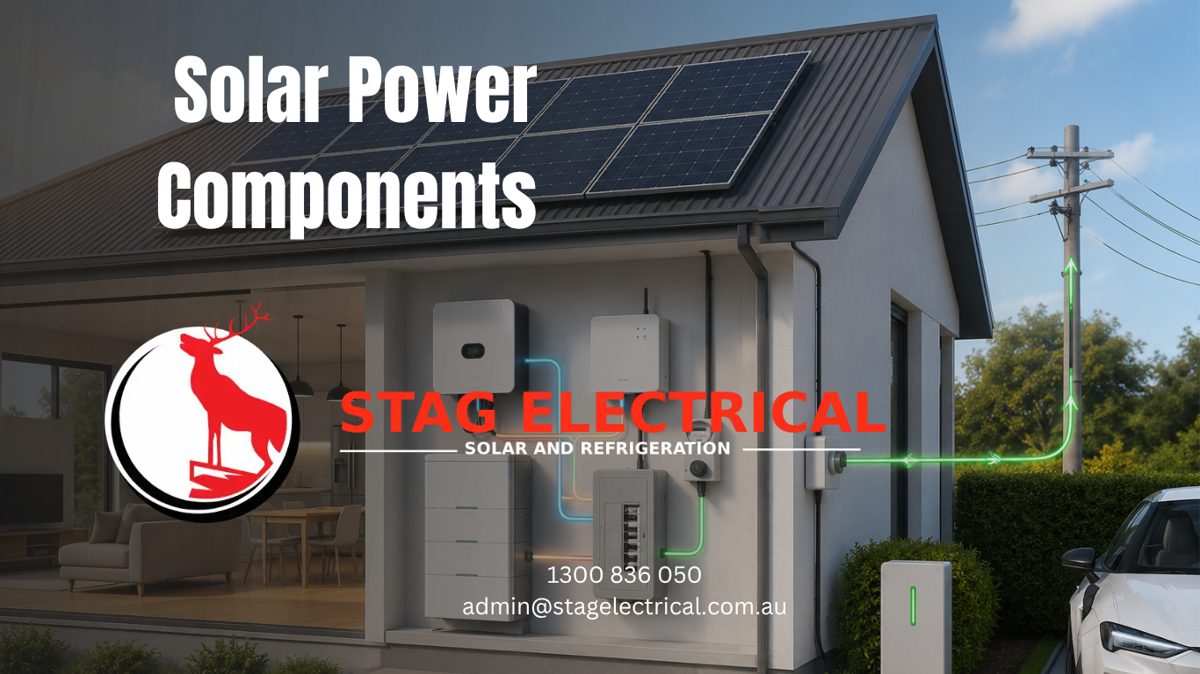
Although each component has a specific job, the real magic happens when everything works together. During daylight hours, solar panels generate electricity, which the inverter converts into usable power for the home. Household appliances use this electricity first. If solar production exceeds demand, the excess energy is stored in the battery.
Once the battery reaches full capacity, additional energy may be exported to the grid. As the sun sets and solar production declines, the battery supplies stored energy to the home. The household imports electricity from the grid only when the battery is depleted. The system includes backup power; the battery can continue powering essential circuits during a blackout.
This process occurs automatically every day, helping homeowners maximise solar self-consumption and reduce reliance on the grid.
How Everything Works Together
Although each component has a specific job, the real magic happens when everything works together. During daylight hours, solar panels generate electricity, which the inverter converts into usable power for the home. Household appliances use this electricity first. If solar production exceeds demand, the excess energy is stored in the battery.
Once the battery reaches full capacity, additional energy may be exported to the grid. As the sun sets and solar production declines, the battery supplies stored energy to the home. The household imports electricity from the grid only when the battery is depleted. The system includes backup power; the battery may continue to power essential circuits during a blackout.
This process occurs automatically every day, helping homeowners maximise solar self-consumption and reduce reliance on the grid.
Is Every Component Necessary?
Not every household needs all the components discussed in this guide.
A basic solar system may include:
- Solar panels
- Solar inverter
- Mounting system
- Smart meter connection
A more advanced setup may also incorporate:
- Battery storage
- Hybrid inverter
- Backup power equipment
- EV charger integration
- Smart energy management software
The ideal system depends on your electricity usage, future plans, and budget.
For example, homeowners planning to purchase an electric vehicle may benefit from choosing equipment that supports EV charging integration from the outset. A solar power system is more than just panels on a roof. Modern systems combine solar generation, energy conversion, battery storage, monitoring technology, and intelligent energy management to create an efficient home energy ecosystem.
Each component plays an important role. Solar panels generate electricity, inverters manage and convert energy, batteries store surplus power and monitoring systems help optimise performance. Properly designed and installed, these technologies work together to reduce electricity bills, improve energy independence, and prepare households for an electrified future. Understanding how every component contributes to the overall system can help homeowners choose a solution that delivers the greatest long-term value. A solar power system is far more than just solar panels on a roof.
Modern systems combine solar generation, energy conversion, battery storage, monitoring technology and intelligent energy management to create a highly efficient home energy ecosystem. Each component plays an important role. Solar panels generate electricity, inverters manage and convert energy, batteries store surplus power and monitoring systems help optimise performance.
When properly designed and installed, these technologies work together to reduce electricity bills, improve energy independence and prepare households for an increasingly electrified future. Understanding how every component contributes to the overall system can help homeowners choose a solution that delivers the greatest long-term value.
Frequently Asked Questions
What Are The Main Components Of A Solar Power System?
A typical solar power system includes solar panels, an inverter, mounting hardware, and a smart meter connection. Advanced systems may also include a solar battery, hybrid inverter, backup power equipment, and smart energy management software.
What Does Each Part Of A Solar System Do?
Each component has a specific role. Solar panels generate electricity. The inverter converts it into usable power. Batteries store excess energy. Monitoring systems track performance. Smart energy management systems help optimise energy usage throughout the day.
Can Solar Panels Work Without An Inverter?
No. Solar panels generate direct current (DC) electricity, but household appliances use alternating current (AC). An inverter is required to convert the electricity into a form your home can use.
Do I Need A Battery With My Solar System?
No. No. Many solar systems operate without batteries and still significantly reduce electricity bills. A battery lets you store excess solar energy for later use, increasing self-consumption and reducing reliance on the grid.at Is A Hybrid Inverter?
A hybrid inverter combines solar and battery management into a single unit. It can manage electricity generated by solar panels, charge batteries and supply power to your home, all from one system.
What Happens To Excess Solar Energy?
If your solar system generates more electricity than your home uses, the excess energy will either be stored in your battery or exported to the grid, depending on your system setup.
Can I Add A Battery To An Existing Solar System?
In many cases, yes. Existing solar systems can often be upgraded with battery storage using a compatible battery inverter or retrofit solution. The best option depends on your current equipment and energy needs.
What Is The Most Important Part Of A Solar System?
Every component is important, but the inverter is often considered the heart of the system because it controls how electricity is converted and distributed throughout your home.
Do Solar Systems Work During A Power Outage?
Not always. Most standard solar systems shut down during a blackout for safety reasons. To maintain power during an outage, you generally need a compatible battery system and backup power equipment.
What Is a Smart Meter, and Why Do I Need One?
A smart meter measures the electricity flowing between your home and the grid. It records both energy imports and solar exports, allowing your electricity retailer to calculate your bills and feed-in tariff credits.
How Long Do Solar System Components Last?
Solar panels often come with performance warranties of 25 years or more. Inverters typically last 10-15 years, while modern solar batteries carry a 10-year warranty, depending on the manufacturer and usage.
Can A Solar System Power An Entire House?
Yes, in many cases. The ability to power an entire home depends on the size of the solar system, the battery capacity, and the household's energy usage. Larger systems are better suited to supporting whole-home energy needs.
What Is Energy Management Software?
Energy managEnergy management software helps optimise the use, storage, and export of solar energy. Some systems automatically charge batteries, manage EV charging, and reduce electricity costs by responding to time-of-use pricing.
How Do All The Components Work Together?
Solar panels generate electricity during the day. The inverter converts it into usable power. Your home uses that electricity first. Batteries store any excess energy, and the grid supplies power when needed. Monitoring and energy management systems help ensure everything operates efficiently and automatically.